 This is it, the traditional spring planting time in this part of the world,
but if you don’t get around to planting because of other exciting two four
stuff, don’t worry. There’s plenty of time left for planting.
This is it, the traditional spring planting time in this part of the world,
but if you don’t get around to planting because of other exciting two four
stuff, don’t worry. There’s plenty of time left for planting.Once upon a time, most annuals were sold in tiny cell packs and it created an urgency to get them into the garden early to ensure they started growing, even though they wouldn’t budge until the soil warmed up. Now, with a trend towards larger, more mature plants in individual pots, timing is less critical.
Whether you plant this weekend or wait until early June,
there is one thing that will help your flowers and vegetables when they have to
face blazing hot summer days, and that’s mulch. In nature, there’s always mulch
on the surface of the soil, usually in the form of a leafy layer.
 Plants expect to be surrounded by mulch; bare soil is not
normal. Covering soil conserves moisture, keeps down weeds, and if organic, it
slowly adds nutrients to the soil as it breaks down. Over the years, I’ve used
a variety of materials as mulch: leaves, manure, mushroom compost, wood chips, straw,
shredded bark, and cocoa bean husks.
Plants expect to be surrounded by mulch; bare soil is not
normal. Covering soil conserves moisture, keeps down weeds, and if organic, it
slowly adds nutrients to the soil as it breaks down. Over the years, I’ve used
a variety of materials as mulch: leaves, manure, mushroom compost, wood chips, straw,
shredded bark, and cocoa bean husks.Anything that covers the soil surface while allowing moisture to penetrate does the trick. I’ll even use clippings from evergreen shrubs, and I always make use of my ornamental grasses crop. It does a fine job in the veggie garden. As they break down, they all help feed the soil, which is so important.
Wood chips or shredded bark are popular, especially on
flower beds in front yard gardens. A few bags may be all you need, but if
you’re a heavy user, consider ordering in bulk. When spreading mulch from four
to eight centimetres deep, which is usually sufficient, a big bag will go a
long way.
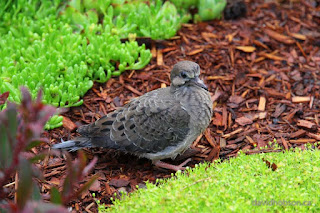 There has been a concern that as wood based mulches break down, they
can deplete the nitrogen in the soil, but this only occurs in the uppermost
layer and isn’t as much of a problem as was once believed.
There has been a concern that as wood based mulches break down, they
can deplete the nitrogen in the soil, but this only occurs in the uppermost
layer and isn’t as much of a problem as was once believed.
 There has been a concern that as wood based mulches break down, they
can deplete the nitrogen in the soil, but this only occurs in the uppermost
layer and isn’t as much of a problem as was once believed.
There has been a concern that as wood based mulches break down, they
can deplete the nitrogen in the soil, but this only occurs in the uppermost
layer and isn’t as much of a problem as was once believed.
As mulch slowly decomposes, nutrients and organic matter are
absorbed, feeding the organisms in the soil. This is a natural process, but it
is far more complex than it appears, especially to anyone who dismisses soil as
dirt — dirt is what you get on your pants after sitting in soil.

Healthy soil is essential, the source of the life above
ground that we can see. As you plant like crazy over the next few weeks, give a
thought to what’s going on below — and spread the mulch.


