Friday, June 13, 2025

Pinch that sucker -- or not

They say there’s a sucker born every minute and it sure seems that way on tomato plants, except they’re not suckers, they’re branches. They're the new growth that sprouts at the intersection of a branch and the main stem of a tomato plant, and the long-standing advice has been to remove them by pruning or pinching them out.

To not do so is at your peril because it’s believed suckers steal energy from the plant. At least that’s the belief, except it’s not so. It’s one of those things that’s been done by gardeners forever because someone, somewhere, thought it was a good idea and no one thought to question it.

What is a sucker? On a tree, it refers to those fresh shoots that appear at the base of a tree. On a tomato plant, there are none. What are referred to as suckers are simply secondary branches, and with their leaves they contribute energy to the plant rather than steal it. These secondary branches will also develop flowers and fruit

So why have gardeners been removing them? First, we have to understand the two main types of tomato plants, determinates and indeterminates. Determinates were initially bred for commercial growers. This type grows only to a limited size and the fruit ripens more or less at the same time, making it much easier for mechanical harvesting. When grown as a large-scale commercial crop, determinate plants are not staked or supported, and you can be sure no one roams thousands of acres of fields, pinching off anything in sight that looks like a so-called sucker.

These smaller, bushier plants are suitable for the home gardener with limited space as they can be easily supported if need be with tomato cages, in ground or in a planter, so why bother with pinching off suckers if the commercial growers don’t bother — I’m getting to it . . .

Prior to the development of determinate varieties, most of the plants gardeners were growing in backyards in the old days were indeterminate plants. We still grow them, and many are heirloom varieties. They’re called indeterminates because they don’t stop growing. Tomato plants are vines and will grow that way when allowed, and for as long as conditions are suitable.

Indeterminates are also the type most often grown as hot house tomatoes in commercial greenhouses. There, they are allowed to grow and produce fruit throughout the season, ensuring a continuous supply for the market. In greenhouse production, the lower leaves are sometimes removed, mainly for hygiene purposes as disease can strike where the humidity is highest. Otherwise the vines are allowed to grow naturally and become a jungle of hanging fruit.

In the backyard, however, where the season is shorter, indeterminates won’t reach the size of the greenhouse plants, but they do need serious staking, with a large cage or strong stakes. And this is where the reason for pinching out the “suckers” probably began. With secondary branches shooting off in all directions, there’d be a need for even more support. By restricting the plant to a main stem, it made sense and was much easier to train the plant. Consequently, the habit of sucker pinching took off and it continues today.

If you need to keep your indeterminate plants under control, go ahead and remove any secondary branches that aren’t required, but don’t feel it’s essential to remove them all. Some like to remove lower branches to improve airflow or keep leaves off the soil. Otherwise, the question is, does it really make any difference?

The answer is yes — sort of. If you leave the secondary stems on the plant, you’ll likely harvest far more tomatoes than you would if you removed them, except they might be a tad smaller than the ones from a plant that had the suckers removed.

So there you have it, to pinch or not to pinch the suckers? The choice is yours. You’ll still get tomatoes.

Friday, April 25, 2025

You don’t need a license to grow trilliums


I can’t say the now defunct design of the last Ontario licence plates concerned me particularly, but it was nice to see the trillium featured on them. I also liked the reference to gardening with the statement that Ontario is a place to grow. The trillium has been Ontario's floral emblem since 1937, and as I’m sure everyone knows, that funny little symbol with three points does represent our provincial flower.

The trillium is also the state wildflower of Ohio, but they don’t honour it the way we do in Ontario. During World War I, the Ottawa Horticultural Society suggested the gentle white trillium should be planted on the graves of Canadian soldiers to signify the homeland left behind, however it was never pursued.

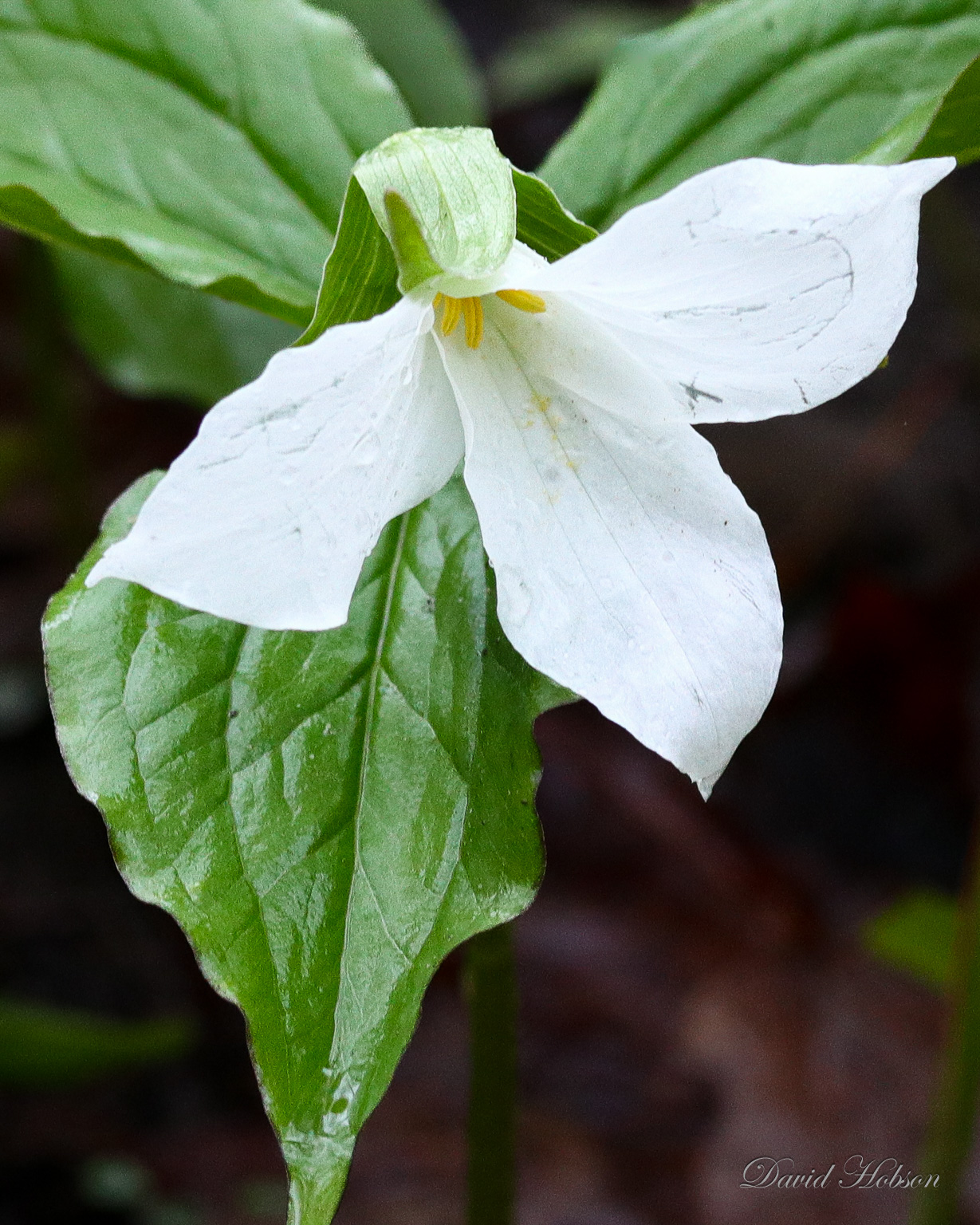
I have a trillium flowering in my garden now, despite suggestions circulating that anyone with a trillium must have plucked it from the wild and in doing so broke the law.

I’m happy to report that I have not, nor am I likely to end up in jail or even be arrested. That’s because it is not against the law to pick or remove trilliums from woodland, unless of course the location is private land. With a slow spring this year, trillium blooms are peaking, or may have passed further south, after lighting up the forest floor. With so many in bloom it’s not surprising that someone is tempted to scoop a few blooms, or even dig up the whole plant.

Although not protected by law perhaps they should be, as should all our precious wildflowers. Picking the trillium for its flower causes damage to the leaves and stems that are essential to future growth. Trilliums don’t transplant at all well from a woodland, and besides harming the plants, it removes the enjoyment for others.

Fortunately, you can grow them in your own garden because they can be purchased from many nurseries that specialize in, and propagate, wildflowers. The trillium you most likely see growing everywhere is Trillium grandiflorum, although according to Ontario Parks, there are another four species.  There’s the red trillium, the painted trillium, the drooping trillium (listed as at risk) and the nodding trillium — I’m not sure I’d be able to tell the difference between the drooping and the nodding.

The red trillium is Trillium erectum, and it’s easy to spot when it pops up in the middle of a patch of white ones. It would even be easy to find one in the dark. Unlike the white variety, which has no fragrance, the red one has the delightful fragrance of day-old roadkill, perfectly designed to attract pollinating flies — and another valuable pollinator plant to add to the garden.

Despite being called the red trillium, the flower has a slightly more burgundy look about it. In fact, deep in the forest there have been reports of ones with slight variations in colour, even orange — I’m still looking. The common name for the red trillium is ‘wake robin’, said to have referred initially to the European robin. Both it and our native robin have similar colouring, and I’m only guessing, but as the breast colour of both birds leans toward orange rather than red, maybe an orange trillium was more common a century or so ago.

There is another species of red trillium I’d like to try growing in my garden and that’s Trillium chloropetalum, the giant wake robin, and it’s a beauty, growing as high as forty-five centimetres high (18 inches). Although native to California, it is a zone six plant, making it hardy enough to grow here.

Wait, there are more. About fifty other species of trillium have been recorded, mostly in North America, though generally further south. So, do watch out for any unique species, but no picking. Unlike those old license plates, they’re not collectors’ items.


Monday, April 21, 2025

It’s a Numbers Game

Fertilizer is confusing, and no wonder. Shelves are stacked with more types of fertilizer than supplements in a health food store. All are in brightly coloured packaging adorned with pictures of gorgeous flowering plants and unblemished vegetables. 

There are fertilizers for tomatoes, ones for roses, another for perennials and so on. All you need to do is match the plant to the fertilizer, right? It couldn’t be easier, except if you grow roses, tomatoes, and dozens of other types of plants, you’ll soon have a full shopping cart. The truth is, you could get by with only one type of commercial fertilizer, or even none if it’s for the garden. By using compost and mulch there, you’d still be fertilizing, but as nature does it.

You’ll note packages of fertilizer always have three numbers. These represent the three main nutrients plants require — nitrogen, phosphorous, and potassium, noted as N-P-K. If the K is throwing you off, that’s because it comes from the scientific term, kalium. These numbers indicate the percentages of each element in the package or bottle. 10-15-10 means it contains 10% nitrogen, 15% phosphorus, and 10% potassium.

You might be wondering why there are so many different proportions listed, and why manufactures can’t agree on those proportions. Next time you’re shopping for fertilizer, ignore the glossy images that were shot in a studio and compare those numbers.

You’ll immediately see they differ from brand to brand even though they’re specified for the same type of plant. I’ve seen brands of fertilizer formulated for tomatoes with the numbers 6-12-12, 4-6-8, 8-24-8, and 18-18-21. No wonder the consumer is confused.

Now you might be wondering how they came up with the numbers in the first place. When plants were first analyzed, it was found they contained different proportions of these three nutrients. It was then assumed that each type of plant required fertilizer in the same proportion, except plants don’t use nutrients the same way at the same time as they’re growing. They take up what they need from the soil when they need it.

It’s much like going to the grocery store when you’re out of milk, butter, or eggs. You buy what you need rather than stuffing the refrigerator. A balanced fertilizer, that is one with equal percentages, say 5-5-5 or 10-10-10, is fine in most situations, but by juggling the numbers manufacturers were able to make their products appear unique. And that’s when marketing with numbers began. But do you really need all that fertilizer? If you’re growing in pots and planters, indoors or out, yes you will need it, as most soil-less mediums have little or no nutrients, unlike real soil.

In the garden it’s a different matter. Remember that middle number, the one representing the phosphorus percentage? The soil in this area began with a limestone base, and as it degraded over time we were left with plenty of phosphorous in the soil. Garden soil doesn’t need any extra. In fact, so much has been added waterways are being polluted by it. 

As for the last number representing potassium, it’s only likely to be deficient in light, sandy soils, not in the typical clay soils we have in our gardens. This leaves nitrogen, the first of the trio. Nitrogen does not stick around in soil, which is why we’re forever fertilizing lawns. By adding compost and mulch, nitrogen and other nutrients are returned to the soil as the organic material is broken down.

Bottom line: If your plants are growing poorly, fertilizer is rarely the solution, and too much can be deadly.Your pots and planters will need it, so use the fertilizer of your choice, ideally, one with a ratio corresponding to 3-1-2 (24-8-16 or 12-4-8, for instance). Also look for additional micro-nutrients that are usually found in the fine print of contents.

Finally, do heed the directions. Like soap powder in the washing machine, more is not better. 

Saturday, April 19, 2025

What a spring tonic.

I couldn’t resist those large, papery blooms of ranunculus I saw massed on a rack at the garden centre. The blooms, which resemble a small peony or a large carnation, are so vibrant, and vibrant is not how I’d describe my garden right now. The plant I brought home with its all too perfect to be real flowers is now at home, sitting beside a sunny window. The flowers last for ages, despite looking as delicate as crepe paper and they’re surprisingly tough. This makes them popular as cut flowers for the florist and in a wedding bouquet. They should keep me going until the daffodils and tulips appear. 

Ranunculus, and not ranunculi if there’s more than one, unlike octopuses, are greenhouse reared to satisfy the craving for colour everyone has when there’s not much going on in the garden in early spring, and they do it well. Commercial growers typically plant in fall for flowers to tempt us in late winter or early spring. With luck and TLC, they can be planted out in the garden after last frost and will continue to bloom until the weather heats up.

Like pansies, ranunculi are cool weather plants that dislike warm temperatures and they’ll tend to fade out as summer progresses. In warmer climates they’re as perennial as daffodils, returning each year. Unfortunately, they can’t take our winters and are gone after one season. They can, however, be treated like summer flowering bulbs such as dahlias and gladiolas. The tuberous root that a ranunculus develops can be dug in fall and stored over winter.

If planted in the garden, it would be best to mark the location as any sign of them will be long gone before fall. Planting in a container would make it easier to track them down, and in fact, it would be a better choice. That way you’ll get a close-up of the gorgeous blooms. Remove spent blooms to encourage more buds to pop open.

Besides trying to keep your spring purchase going outdoors, actual tubers can be bought and planted in spring, the same as summer flowering canna or calla lilies. That way they’ll grow through summer and flower in late summer to early fall when days are cooler.

The tubers are odd shaped, resembling a dark bunch of over ripened bananas, or gardener’s grubby fingers, I suppose. That makes it easier to be sure you’re planting them pointing the right way — fingers downwards with a couple of inches (50mm) of soil over them.

To attain the best plants, the larger the tubers the better. Whether in ground or in a container, don’t plant in soil that stays wet. If planted in a container, they will need fertilizing.The ranunculus family is huge, with over 500 species, and it marsh marigolds that will soon be popping up around wetlands anytime now, along with croaking frogs — if spring ever arrives. The Latin name for frog, rana, is where ranunculus got its name because many species grow in damp places.

Ranunculus asiaticus is the one that’s been bred most often to produce the varieties we see with huge flowers. The pot plants may not be labelled, but two common series are Tecolote and Bloomingdale — no connection with our Bloomingdale. Bloomingdale is a dwarf variety while Tecolote has longer stems. Because of its popularity as a cut flower, ever more hybrids are being developed, particularly in Japan.

If you can distract your eyes from the gorgeous flowers, you might find the foliage looks familiar. It looks a lot like parsley, except it can cause intense burning of the mouth and throat if swallowed, so keep them well apart in the garden or kitchen.