Monday, December 8, 2025

Here they come again

 Are you and your houseplants troubled by fungus gnats, those pesky bugs that look like fruit flies, or mini mosquitoes? They come with the territory and your houseplants are their territory, or to be more precise, the soil in which your plants are sitting. If you’ve never been bothered by them, either you’re lucky, or all you grow are cactus and other desert plants — we’ll get to that later.

Fungus gnats are not a threat to animals or children, but they can seriously upset an adult. You’ll know you have them when they rise to greet you as you approach your plants, and they’ll head for your nose because after damp soil they have a fondness for the carbon dioxide you’re emitting. Fruit flies, however, are attracted to fruit rather than soil. Leave a grape on the kitchen counter too long and fruit flies are soon rolling it out the door. Their bodies are orange or brown and a little plumper than the gnats.

The only function of a fungus gnat is to mate and then lay tiny eggs on the soil of houseplants. Adults live about seven to ten days and deposit eggs on the moist soil surface or in soil cracks. Females lay from 100 to 300 eggs in batches of 2 to 30. Eggs hatch in four to six days; larvae feed for 12 to 14 days. The pupal stage is about five to six days. So as fast as you wipe out one batch, there’s another group hatching. The gnats don’t live long. After a week or so it’s off to the undertaker but then new ones arrive and it becomes an endless cycle — unless you take action.

Since you take loving care of your plants and never forget to water them, you’re providing perfect conditions to support them. They love that damp soil full of organic matter, which is why fungus gnats aren’t attracted to the sandy cactus soil of succulents. 

Soaking the soil with a variety of solutions is often suggested, although some can be just as toxic to the user. A safe one is mosquito dunks, which contain BTI, a type of bacteria that kills mosquito larvae, and it is effective on the fungus gnat larvae.

Other advice will recommend you let the plants dry out as much as you dare between waterings, at the same time fluffing up the soil surface with a fork, allowing it to dry quickly. This makes the environment uninhabitable for eggs and larvae. That’s fine if you only own one houseplant, otherwise the task becomes tedious and time consuming. Watering only from the bottom, however, can also help.

An easier solution that I’ve found effective is to add a layer of grit or fine gravel to the soil surface. This simulates a desert, and acts as a barrier to the egg-layers. It’s an attractive mineral mulch. Add a yellow sticky trap to catch the frequent fliers and that usually takes care of fungus gnats. You might even catch a few fruit flies too.

Thursday, November 27, 2025

You probably don’t need to know this

Here’s a little trivia to share, however, it might only elicit a few murmurs of huh, okay, or how about that — if you’re lucky. The only occasion when it might be worth repeating is when a conversation has stalled and is almost beyond recovery. It might help if there’s an amaryllis handy, preferably in bloom, or at least sprouting leaves.

It’s then you could pipe up and say, "Although we might call them amaryllis, the correct name is Hippeastrum, a genus of plants from South America.” Right, you needn’t have bothered because few give a hoot about the botanical nomenclature of plants. Botanists do, although they don’t always agree. They long debated whether the ones we know and love belong in the genus Hippeastrum, a group of plants native to South America, or should they be classed as Amaryllis belladonna, a plant from southern Africa?

The argument went on until 1987 when the 14th International Botanical Congress decided our seasonal houseplant was indeed from the genus Hippeastrum. Fortunately, they agreed amaryllis would be a “conserved name”, meaning it was okay to continue calling it what we always have done.

Regardless, these plants that brighten our homes as days shorten are all the result of hybridisation of Hippeastrum species from Central and South America. They’re selected and bred for flower size and ease of forcing in a gorgeous range of colours that continues to expand.

As for Amaryllis belladonna, the one that caused all the confusion, it’s a plant that you’d more likely see growing outdoors. In more temperate regions around the world, it’s become naturalized. One of the common names for it is naked ladies (not the fall crocus), so named, not after the band, but because the flowers bloom before the leaves appear, like the fall crocus. It could be grown in our gardens as a summer flowering bulb, that is if you can find it. 

I’m afraid my suggestion of a garden plant that you can’t easily buy is about as useful as the bit of trivia, so back to our good old amaryllis. You might be unloading one with the groceries right now as they’re currently being sold everywhere. If you also bought a monster garlic or some kind of exotic root vegetable, make sure it’s the amaryllis that goes in a flowerpot, not the soup pot because it is somewhat toxic to humans, but only if you eat a lot. Dogs and cats, however, can become quite ill if they were to chew on a bulb or eat the leaves.

Now that I’ve sorted out the plant that no one was confused about until I brought it up, here’s how to care for it. Some come ready planted with complete instructions, but if you’re starting out with a bare (don’t mention naked) bulb, choose a pot that is slightly larger than the bulb, preferably a heavier one to avoid tipping.

Don't bury the bulb completely in the pot, just two thirds to three quarters deep leaving the shoulders exposed. A specific potting soil isn’t necessary. Place in a warm, sunny location and water sparingly at first as too much can cause rotting. Gradually water more as the leaves and flower bud appear and fertilize every couple of weeks. To prolong blooming, move it to a still bright but slightly cooler location.

Pinch off the blooms as they fade but keep the leaves growing for as long as possible to replenish the bulb. To get it to flower again next winter, sink the pot in the ground outdoors in spring. Cut off the foliage after it dies back, then leave it be until September.

Repot in fresh soil, bring it indoors, repeat the process as above and you can look forward to it blooming a second time — how about that, huh?

Friday, October 31, 2025

A rainforest indoors.


 Front opening reptile tank

Given all the high-rise condominiums going up, city residents without a backyard will soon outnumber those who do have a patch of green. It’s especially hard for those who are used to having a garden, so why not a mini garden, a terrarium. They can be easier to maintain than trying to keep houseplants alive in an arid home.

I have three or four terrariums on the go at different times. The mini gardens help me endure the long wait for spring to arrive. They range from the size of a light-bulb to as big as a double air fryer. A terrarium is like a small zoo for plants and are ideal for small houseplants that originate in the lower light humidity of a rain-forest, not in a toasty home. Once established a terrarium is easy to maintain. 

A typical plant terrarium is a closed eco system. However, if used for cacti or other succulents, then it must remain open to provide more desert-like conditions, otherwise they won’t last long sweating it out in sticky box. Here, I’m focusing on a closed terrarium. 

You can purchase a new one, although most of the ones I see are small, big enough for only a plant or two. My larger one is designed for housing reptiles. The plants are happy and take little care, especially as there’s no need to check every day to see if they need watering. If you have an old aquarium or reptile tank sitting around, it will only need a glass or clear plastic cover that can be opened slightly if necessary to control the humidity. 

The first thing you must do before starting to build yours, whether brand new or not, is to sterilize it, or at least clean it well, which is my lazy approach. Next is soil. Here’s where it can get controversial. Most books, magazines, and YouTube videos will recommend having a layer of gravel below the soil, even adding charcoal. I’ve never done either and I’ve never found it necessary. My terrariums are the happiest with simply a couple of inches or more of a soil-free medium. 

It’s easiest to mix and moisten the soil before placing and that avoids any chance of making it too wet. You can make a few hills and valleys in your mini landscape and add a rock or piece of driftwood to make it more interesting. The soil can be deeper in places depending on the plants you add. Almost any low growing houseplant is suitable, but don't mix light-loving flowering plants with ones that prefer shade. If you need colour add varieties of Fittonia, the nerve plant, with their beautiful, bright and colourful veining.

So, if the fish are floating or Iggy the iguana's been missing for a month, you might as well make good use of that tank. Has the snow melted yet?

Note: Shown above is a front opening reptile tank for easy access. 

Halloween Cats

I do like cats

Roses are a lovely plant,
A long-time favourite of my aunt
They flower for her every day
More since uncle passed away

He’s buried in the flowerbed
Since aunt whacked him in the head
It wasn’t just a simple spat
She loved her roses; he loved his cat

Each day aunt would prune and hoe
Each night that cat would boldly go
Tension daily grew and grew
Until one day aunt’s temper blew

With bulging eyes and face all red
She grabbed a shovel from the shed
And swung it like a baseball bat
First at uncle, then the cat

She tenderly laid them to rest
Poor uncle and the furry pest
She buried them real close to home
Against the fence in sandy loam.

Where aunt sometimes now plucks a bloom
And ponders on the victim’s doom
She oft regrets that it were so,
But oh, those roses, how they grow

Yet sadly Aunt had been misled
The hated cat still was not dead
Nine lives it had to haunt her still
No more the roses would they thrill

They grew so well you understand
Fragrant yes, but not so grand
Wafting on the evening air
Stench only of the rotting pair

No more the favourite of my aunt
No rosewater to decant
Just haunting eyes o’er her bed
From a disembodied head

A ghoulish purring in the night
Now wakens aunt in awful fright
Her nightmare roses ooh ooh ow
Are thorn-like claws meow meow


Friday, October 3, 2025

Orange Globes Again

It’s hard to avoid those large, orange globes — you know what I mean. What do they call them — pumpkins? Yes, it’s that time of year and they’re sprouting everywhere, even crowding out election signs. They’re also a big news story — that is the big ones are. It seems there’s a record broken every fall for size and weight.

Besides the challenges of transportation to the weighing arena, there’s clearly a lot more involved in competitive pumpkin growing than just scattering a few seeds in the garden. I have grown pumpkins on occasion, and it was exciting the time I had one climb into a tomato cage. When it bulked up it absorbed the whole cage and became a goofy Halloween display all on its own, a performance artist pumpkin tottering on its three spiky legs with wires growing through its head — sort of a man in the iron mask look.

Yet I'm not competitive enough to dive into record breaking attempts, and besides, I really don’t have the room. My suburban lot isn't large enough to grow something the size of a garden shed, although it does sound almost like a practical idea. Plant it in spring, stop feeding when it reaches the appropriate size, scoop out the inside, then cut in the doors and windows and voila —  an orange garden shed. Not large enough? — I could grow a fresh one each year.

Durability might be an issue though, given how regular pumpkins tend to implode over time if left too long on the porch. I imagine a shed sized one could become its own compost pile overnight, then there’s an awful mess to clean up. I think I’ll stick with regular sized pumpkins — or even miniatures ones. Why not? Down sizing happened with pet dogs. If they get any smaller, we’ll be keeping them in bird cages.

As it happens, I did grow miniature pumpkins this year and I’m pleased with the results. They’re not really pumpkins, but they sure look like pumpkins. They’re just as orange, just as creased, and what’s more, my one plant produced dozens. They’re actually a plant in the nightshade family — same as potatoes and tomatoes. In fact, they've been called mock tomato. They’re also called Ornamental Eggplant, pumpkin bush, and my favourite, pumpkin on a stick. Solanum Integrifolium is the botanical name and it’s native to South East Asia.

It’s cooked there in stir fry dishes, but I'm not planning to eat mine without a little more research, but I am happy to grow it as an interesting ornamental plant. It was easy to grow and could have reached over a meter high if I’d given it a sunnier spot. I bought it as a plant in spring, although it can be grown from seed. I thought it looked interesting and stuck it in an out of the way corner in part shade then forgot about it until I saw golf ball sized pumpkins growing. 

Despite a lack of attention, my plant managed to produce a few dozen fruit. They’ll look perfect in a fall display basket — one with gourds and stuff. Not my thing, really. I think I’ll carve them as Barbie sized ghouls — or Barbie sized garden sheds. 

Friday, September 5, 2025

Rockway Gardens, Kitchener, Ontario.


This is a short piece I wrote for Canadian Gardening magazine some time ago.

In 1928, a strip of wasteland alongside the eastern approach to the city of Kitchener, Ontario, sprouted nothing but scrub and billboards.

Today, it’s Rockway Gardens, a three hectare floral ribbon, created and maintained by the Kitchener Horticultural Society. The gardens are now within a vastly expanded city, a source of civic pride that sees numerous bridal parties waiting in line each weekend in summer for wedding photographs beside vintage fountains or before a low limestone escarpment.

It appears natural, but this impressive rockery, spilling with flowers, was constructed during the depression years with almost 2,000 tonnes of limestone. Designed by prominent English landscape architect, W. J. Jarman, the project provided relief work for the unemployed during difficult times; allowing many to hold onto their homes by contributing labour in lieu of paying property taxes. Work continues at the gardens. Each year, volunteers from the Horticultural Society, whose motto is “community beauty is a civic duty”, contribute to their heritage by planting thousands of bulbs and annuals at Rockway to welcome visitors to the city of Kitchener.

At 270 Simcoe Street North in the city of Oshawa lies another garden developed during the same period. Parkwood, now a national historic site, was the home of Sam McLaughlin, founder of General Motors of Canada. His impressive and imposing mansion is set amid five hectares of gardens designed by a series of prominent landscape architects of the early twentieth century, including W.E. Harries and A.V. Hall, and the Dunington-Grubbs, husband and wife team who were founding members of the Canadian Society of Landscape Architects.

These talented people created delightful garden rooms adorned with beautiful statuary, including the Italian Garden, the Sunken Garden, the Sundial Garden, all linked by paths and hidden nooks to greenhouses where orchids and palms share space with the Japanese Garden and the Greenhouse Tea Room.

The last major development took place in the thirties, when architect John Lyle was commissioned to design a formal garden in the art moderne style, a branch of art deco. Viewed from the terrace, a bridal party posing amid the elegant simplicity of the garden with its string of fountains evokes a beautiful representation of the period.

Friday, April 25, 2025

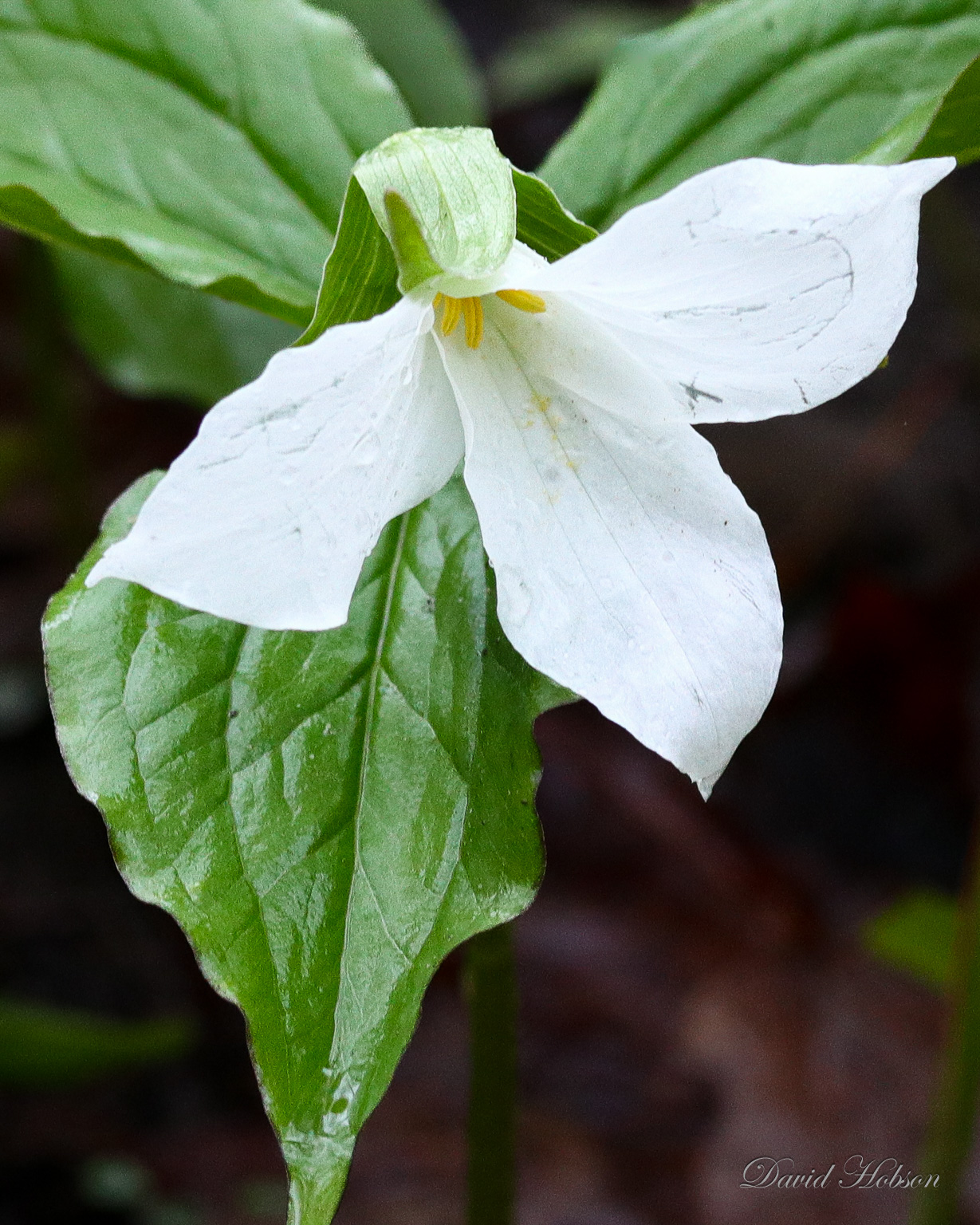
You don’t need a license to grow trilliums


I can’t say the now defunct design of the last Ontario licence plates concerned me particularly, but it was nice to see the trillium featured on them. I also liked the reference to gardening with the statement that Ontario is a place to grow. The trillium has been Ontario's floral emblem since 1937, and as I’m sure everyone knows, that funny little symbol with three points does represent our provincial flower.

The trillium is also the state wildflower of Ohio, but they don’t honour it the way we do in Ontario. During World War I, the Ottawa Horticultural Society suggested the gentle white trillium should be planted on the graves of Canadian soldiers to signify the homeland left behind, however it was never pursued.

I have a trillium flowering in my garden now, despite suggestions circulating that anyone with a trillium must have plucked it from the wild and in doing so broke the law.

I’m happy to report that I have not, nor am I likely to end up in jail or even be arrested. That’s because it is not against the law to pick or remove trilliums from woodland, unless of course the location is private land. With a slow spring this year, trillium blooms are peaking, or may have passed further south, after lighting up the forest floor. With so many in bloom it’s not surprising that someone is tempted to scoop a few blooms, or even dig up the whole plant.

Although not protected by law perhaps they should be, as should all our precious wildflowers. Picking the trillium for its flower causes damage to the leaves and stems that are essential to future growth. Trilliums don’t transplant at all well from a woodland, and besides harming the plants, it removes the enjoyment for others.

Fortunately, you can grow them in your own garden because they can be purchased from many nurseries that specialize in, and propagate, wildflowers. The trillium you most likely see growing everywhere is Trillium grandiflorum, although according to Ontario Parks, there are another four species.  There’s the red trillium, the painted trillium, the drooping trillium (listed as at risk) and the nodding trillium — I’m not sure I’d be able to tell the difference between the drooping and the nodding.

The red trillium is Trillium erectum, and it’s easy to spot when it pops up in the middle of a patch of white ones. It would even be easy to find one in the dark. Unlike the white variety, which has no fragrance, the red one has the delightful fragrance of day-old roadkill, perfectly designed to attract pollinating flies — and another valuable pollinator plant to add to the garden.

Despite being called the red trillium, the flower has a slightly more burgundy look about it. In fact, deep in the forest there have been reports of ones with slight variations in colour, even orange — I’m still looking. The common name for the red trillium is ‘wake robin’, said to have referred initially to the European robin. Both it and our native robin have similar colouring, and I’m only guessing, but as the breast colour of both birds leans toward orange rather than red, maybe an orange trillium was more common a century or so ago.

There is another species of red trillium I’d like to try growing in my garden and that’s Trillium chloropetalum, the giant wake robin, and it’s a beauty, growing as high as forty-five centimetres high (18 inches). Although native to California, it is a zone six plant, making it hardy enough to grow here.

Wait, there are more. About fifty other species of trillium have been recorded, mostly in North America, though generally further south. So, do watch out for any unique species, but no picking. Unlike those old license plates, they’re not collectors’ items.


Tuesday, March 18, 2025

Low budget gardening

If you love gardening and it's at the bottom of  the list when it's time to dispense funds from a limited budget that is food, mortgage payments, or phone plans for teenagers, then consider dirt-cheap gardening, or if you prefer, gardening for the frugal. Better still, call it smart in a world where practising the three Rs (reduce, reuse, recycle? is considered a virtue.

Gardening is the ideal place to practice the above. Not only can it save you a tonne of money, but you'll also be helping the planet, and everyone knows it needs all the help it can get.

Begin indoors by extending the life of plastic containers before they reach the blue box. Blue box day is a treasure hunt for all kinds of garden stuff. Those 20-litre water bottles with the bottom cut out make an excellent cloche to protect young plants when there’s a risk of frost.

There are also surprising finds on garbage day such as decorative planters that someone tired of. I see coils of hose that only need a new end. Repair is another R to value. Garden tools are tossed out when downsizing is underway. While out curb shopping, scoop any old snow shovels; the handles are usually in perfect shape and make great replacement handles for the spade you broke trying to lever a rock out of the garden. Afraid of being seen as a scavenger? It’s a way of to survive in parts of the world. Wear a mask if it helps, but don’t stop by a bank on the way home.

Before those garden items make it to the curb, they pass through the garage sale stage. Garage sales are a major source of planters. Even an old suitcase can be filled with flowers — have plants will travel — and I don't know why, but wicker baskets seem to end up in driveways in quantities to rival the vast number of VCRs and vintage stereo systems from the ‘80s. Line the baskets with plastic and you'll have a lovely planter that will do at least a couple of seasons.

Depending on the number of fashionable planters you bring home from the garage sale trip, it can be pricey when you come to fill them with potting soil. Garden soil is fine but it may need lightening for better drainage if it’s clay based. Add sand or perlite to ensure it drains freely. Coir or peat moss will help retain moisture. Rather than peat moss, there is a more environmentally friendly medium produced with wood fibre.

Beyond planters for work in the garden, you will need a spade to dig or shovel the soil, but one trip past the tool racks at the garden centre can be frightening for the new gardener — "You mean I need all that stuff just to grow a few plants?" No. Garden tools are becoming like workshop tools/toys — a different one for every conceivable project or task. You'll get by surprisingly well with a minimum of a spade, a rake, hoe, trowel, and pruners. The spade is important for planting, but regular digging of flower or veggie beds can be reduced by top dressing with compost or leaves and letting the worms do all the work, and compost is usually free from most municipalities.

Plants for your pots or garden are the easiest. Grow your own from seeds or watch for plant swaps. Gardeners are constantly digging and dividing plants or sharing seeds and are eager to see them go to a good home. Remember, too, when buying plants, that small trees and shrubs will eventually grow into big trees and shrubs but will cost much less. Be a real gardener — be patient and be resourceful, and that’s another R.

Wednesday, February 5, 2025

Buyer Beware

While gazing at the gorgeous images displayed in seed catalogues, you might be wondering, have I seen that plant before, and is that a new colour? We always assumed catalogues had accurate representations of plants, and those of reputable suppliers always do. However, the world is changing and especially the online world where fact checkers, even for plants are lacking. 

In the early days gardeners relied on drawings and descriptions of the material in catalogues. Even Group of Seven artist J.E.H. MacDonald, designed many catalogue covers for Sheridan Nurseries. Photography eventually became the norm, first black and white then colour. These images depicted plants in an actual garden before it became easier to produce better ones under lighting in a studio.

There, images could be more easily adjusted to ensure the colours matched the real plant. I picture ex fashion photographers using their skills to show flowers in their best light where you might hear them cajoling poor plants with “Stretch that stem, unfold that petal, tint that pink, more stamen, more stamen. Work with me, work with me. Come on pansy — show me a pout.”

It’s hard to know what’s genuine now when nefarious vendors online have realized there’s a huge market of gardeners waiting to be tempted by new plants in never-before-seen colours. First it was editing software which made it easy to generate images, and strange new ones appeared. Now we’re dealing with artificial intelligence that can conjure up anything a creator desires.

We’ve long been awaiting a truly blue rose. With only a few clicks, it’s easy to produce an image of a blue rose with yellow polka dots or pink stripes, or any combination. And the same goes for vegetables that can be made to appear larger, taller, and produce amazing crops. Stick these images on social media with a thrilling description of a revolutionary new plant plus a link to where to send your money — click, click.

Seasoned gardeners might not be easily fooled, even though some probably are. I know I’ve been tempted. Beginners can’t be expected to recognise flowers as obviously fake when they’ve only recently discovered there are thousands of plants in a rainbow of colours to choose from. Of daylilies alone, there are over 80,000 registered varieties in vibrant colors and diverse shapes. So why not a rainbow rose?

It might not be easy to determine the legitimacy of a company, but all plants have, or should have, a genuine botanical name listed somewhere. But what copywriter wants to clog up advertising text with challenging words when a catchy new name attached to an AI image will produce instant clicks. It can give anyone a headache trying to remember the Latin names of all the plants in their garden but knowing that a plant should have a legitimate one will help avoid those budget breaking clicks.

That’s the plants. Don’t get me started on the products that claim to produce plants even more productive or floriferous. Buyer beware — everywhere. Buyer beware — click, click.


Sunday, January 19, 2025

Art and Sculpture in the Garden

I only caught a glimpse of the couple as I entered the garden. I followed the path around the lawn, past the pergola that gave shade to the bench below. The pair were in a corner, almost hidden in foliage. As I approached, I felt I was intruding on an intense conversation between lovers that had fallen silent at that very moment. Had they declared their love? Had they quarrelled? What had she asked of him? Had he answered? I tried to interpret their expressions, to imagine their thoughts. I wanted to hear them speak, however, the silence continued. But then why would five feet of inanimate concrete have words for me?

They’d been lovingly placed there when the garden was young; so many years ago that bright yellow lichen now adorned his jacket. The quiet presence of this piece of statuary enhanced the garden, perhaps evoking pleasant memories in the one who tended it throughout the seasons. For me, a casual visitor to this garden near Portsmouth, England on a sunny day in 2005, it caused me to pause and to ponder, just one of the reasons artwork is created.

 It was a little disconcerting to see the face peering from the foliage at the foot of the garden, the late afternoon sun casting shadows, further obscuring the figure. It wasn’t that I was startled; I’d been forewarned on entering the garden to look out for Leila. She’d be waiting beyond the rose garden, near the stand of Japanese Silver Grass. I said hello Leila, not expecting a response. I mean, why would five feet of inanimate concrete graced by a soft patina of pale green lichen have words for me.

But then she didn’t need to speak. Her silent presence enhanced the peacefulness of the garden; she was a part of the garden, part of the family, at home where she stood. She’d been placed there some years previously, when the garden was young. At the time she stood alone in a corner of a lawn. As the garden grew, evolved, shrubs and trees took their place, and Leila, no longer standing alone in a bare expanse of manicured green became one with nature, as I discovered her.

Artworks in the form of statuary and sculptures have long been used to elevate the sometimes prosaic nature of gardens since the earliest times. The ancient Greeks and the Romans had their peristyle courts; enclosed gardens where classical sculptures would be displayed, typically reflecting philosophical or religious motifs and set on pedestals to be gazed at in awe.

It was during the Italian Renaissance in the fourteenth century when gardens became larger, symmetrical, and besides the grottos and fountains, there was always classical statuary. The Italianate style found its way to Britain, particularly during the nineteenth century when travelers returning from a
Grand Tour of Europe developed their own Renaissance gardens and filled them with statuary.

Travel the great gardens of Britain today, those built long ago by the aristocracy or early industrialists, and it’s soon apparent statuary was big business in the eighteenth and nineteenth centuries. Materials were still the traditional marble, stone, or bronze, but in far greater numbers — every garden owner of note wanted to enhance their estate.

The need was filled by using composite materials, though often of inferior quality — a crumbling David would be unlikely to inspire or impress anyone. This was resolved around 1770, when enterprising Eleanor Coade invented Coade stone, an artificial material used for moulding neoclassical statues and garden ornaments. Of such high quality and virtually impervious to the eroding effect of weather, it outperformed natural stone. By the 1840s artificial stone produced using Portland cement came on the market and the more expensive Coade stone was largely phased out.

Lost over time, the original secret recipe, a form of ceramic using crushed flint, fine quartz, and crushed glass was rediscovered and further refined by sculptor and stone carver Stephen Pettifer. In 2000 he founded the Coade Company in London, England, which continues to produce all forms of statuary.

In those great gardens, even now, two centuries later, what may appear to be an original piece carved from stone could well be Coade stone.

By the start of the twentieth century the popularity of classical sculpture waned somewhat with the advent of modern sculpture, beginning with the work of Auguste Rodin, who exhibited at the Universal Exhibition held in Paris in 1900. Since then, every form of abstract artistic expression has made an appearance, in galleries and as public installations, in gardens as originals or more often replicas, and produced now in every possible medium.

Just as the Greeks and Romans created places to display their sculptures, today, parks are created specifically to display sculptural works, or they are exhibited in existing gardens. Somehow, the placing of sculptures in a natural setting enhances the moment, and is a way of introducing such works to the public. Cambridge has its delightful Sculpture Garden located on Grand avenue South alongside the Grand River. At the Homer Watson Gallery in Kitchener, there are whimsical works by local artist, Glen Smith on display in the small garden there.

The Seattle based revolutionary blown glass artist Dale Chilhuly exhibits his work in gardens around the world with multicolored pieces that can be mistaken for plants and trees of the natural world. At Kew Gardens in London, his work was once exhibited both in the gardens and inside the majestic palm house because, as he said, he always wanted to show his glasswork in a glasshouse. His pieces have also appeared at the Desert Botanical Garden in Phoenix, Arizona. While visiting, I could easily have mistaken his spiky, chartreus cactus for a rare saguaro if it hadn’t been sparkling so in the bright desert light.

I’d much rather wander a park or garden than a gallery or museum, and it was first in those large stately gardens of Britain where classical statuary abounds that I first discovered my love of sculpture. Renishaw Hall in the north of England is typical of the nineteenth century style with its stunning Italianate gardens. Statuary there graces the pathways, at flights of steps, between garden rooms and within them, where they stand in the shade of topiary hedges five meters high. Sometimes the topiary works are sculptures in their own right.

Likewise in the south of England at Hever Castle, the childhood home of Anne Boleyn, the American millionaire and philanthropist William Waldorf Astor, beginning in 1906 added a magnificent Italian garden and filled it with his own collection of statuary retrieved during his European travels.

More a park than a garden, the Yorkshire Sculpture Park was developed specifically for the display of sculpture, including a number of Henry Moore pieces. Not sure how Henry would feel about sheep wandering around his work, although it honours his commitment to having his work placed in the open air.

It was in a more formal part of the park that I discovered the 'Moon’, a piece I’d perhaps unfairly describe asa large scale version of a Victorian gazing ball.  Hand-blown glass garden accents were first recorded as being produced in Venice 13th century. In the 16th century the English philosopher Francis Bacon commented that a proper garden would have round coloured balls for the sun to play upon, and by the Victorian era they became a popular garden feature, and are still. They are intriguing, the way they reflect and shimmer as the light changes, but I’m happy to gaze at them in someone else’s garden.

The ‘Moon’, however, by Swiss artist Not Vital (a confusing name in English) is something I’d covet if my garden were large enough to house it. ‘Moon’ is a highly polished sphere in stainless steel replete with tidy, random dimples representing, I suppose, the more ragged craters of the moon.

Three meters in diameter, it sits in an expanse of grass, and like the real moon’s gravitational field, it draws viewers to touch, to marvel, to observe the distorted reflections of the tree filled park. It now has its own Saturn like ring, formed by the circling footsteps of a captivated audience.

One of the finest, though fleeting, exhibitions of garden art is to be found at the Chelsea Flower Show held annually in London, England. It’s here where designers compete for gold medals in garden design. The gardens are imaginative wonders, works of art in their own right, and typical contain sculptural pieces to complement and enhance the experience.

At the 2016 show, a garden by Russian designer Tatyana Goltsova explored the complex relationships between Russia, Ukraine and the UK, though not in the current political sense. A work by Ukrainian sculptor Victoria Chichinadze that embodied the spirit of the traditional lace makers of Eastern Europe was allowed to beautifully dominate the garden. Crafted from 600kg of aluminum, the white, lace-like form, in sharp contrast with the surrounding green, swirled through the garden to skim the surface of a water feature called River of Time, culminating at a transcendent female figure.

Also at the 2016 show, a gold medal winning garden by Chris Beardshaw prominently featured a haunting, contemplative face. Named The Fallen Deodar, it was one of a limited edition of six in verdigris bronze. At 1.5 meters across, the original was carved from, and inspired by, a massive Deodar tree (Cedrus deodara) that had fallen on bleak Dartmoor, not far from the home in Devon of artist Jilly Sutton. The original work now resides in a garden somewhere in Tokyo, fittingly owned by one of the tree leaping Japanese actresses who appeared in the movie Crouching Tiger Hidden Dragon.

Given the long historic association of art and gardens, it would almost seem that a garden is not complete without a sculpture or piece of artwork. Ensuring each complements the other is the challenge. Those who design both sculptures and gardens understand the importance of scale, texture, and appropriate placement, and it’s no less important in a home garden.

I’ve always believed a garden is a personal space, accepting of anything the owner chooses to place
there. Garden gnomes, super heroes, well-dressed mannequins and even the many nefarious Lord of the Rings characters have all found a place in gardens. A monstrous orc, however, would be more suited to a huge gothic garden rather than lurching out of a flowerbed, unless, of course, it happens to frighten rabbits.

Besides these outliers an endless supply of decorative, often beautiful accoutrements awaits the browser at every garden show and gift store where there’s something to suit anyone’s taste. Smaller items are useful for punctuating an entrance or creating particular interest within a planting, but too many are . . . well, too many.

Plonk something in the middle of the front yard, though, and it’s on public display. That group of fake deer on a country property viewed through a morning mist can for a moment be delightful — or induce a moment of panic, but in the harsh light of midday . . . well, they’re still plastic deer. And massive concrete lions rampant at the foot of a suburban driveway somehow don’t capture the essence of the veldt — they’d be far more effective lurking in the shrubbery.

Many an expanse of green lawn does indeed cry out for a focal point, yet it is so worthwhile to reflect on those masters of design when choosing a sculpture and the way they considered theme, scale, location — and the garden. The appropriately placed classical statue awaiting discovery at a random turn in the garden will gently delight the unwary visitor.

A graceful Aphrodite, framed naturally in an arch of trees can be perfect. Position her at distance point to become a silhouette at sunset or sunrise and the effect is magical. When a piece such as this has attained an ancient, mossy patina, and is revealed only when a breeze stirs foliage, it becomes an enchanting dreamscape, and sometimes startling part of the garden.

Tuesday, December 31, 2024

Getting closer but not there yet

Imagine, lying in bed nice and cozy then suddenly the duvet is whipped off. That’s bad enough, but then the window is thrown wide open and an icy blast flash freezes your tender bits. If this is repeated enough times, those bits will fall off. This is exactly what happens to plants in the garden when the snow melts quickly, as it has this week.

Snow is an insulator, the deeper the better. It keeps plants in a comfortable state of dormancy. Even in winter, soil is giving off heat. Deep down, soil temperature is around 10 degrees or so, summer and winter. Where there’s a deep layer of snow acting as insulation, the surface temperature of the soil may be barely frozen. A study from the University of Delaware showed that for each centimetre of snow cover, the soil temperature will increase by roughly half a degree Celsius. 

Being suddenly exposed to icy blasts won’t bother tough plants, especially native ones, but any tender ones will suffer. And if the icy blasts don’t get them, the soggy soil will. The ground below may remain frozen, but nearer the surface it will be waterlogged. This happens in spring, but the ground soon thaws and normal drainage is resumed. When it happens in the middle of winter, that soggy ground refreezes. Repeat a few times and the expensive, borderline hardy perennial that you planted with care last spring will quietly succumb and no amount of coaxing will revive it. The same conditions can easily cause plants that aren’t well rooted to be heaved out of the ground, dead or alive.

I haven’t reached the point where I’m pushing wheelbarrows full of snow to the backyard to cover tender plants, but I have on occasion tossed a few extra shovelfuls over one or two. I usually mulch around the special ones in fall to help them resist the effect of winter thaws.

There are places in my backyard where the snow drifts deeper, and consequently, plants below are less prone to being prematurely exposed. The same occurs in sheltered areas, usually in shade and out of the wind. It’s worthwhile to note these places as they are in effect, micro-climates. A tender plant may require other specific considerations — soil type, sun or shade etc. — but it might just stand a better chance by being planted where it won’t be subjected to harsh conditions too early in the spring.

It’s also worth noting where the opposite occurs — areas in the garden where wind consistently whips snow away to expose the soil. This happens around the base of shrubs, posts, and against a fence, or building.

The snow is often scoured away along sides of buildings, depending on the prevailing wind, although the soil may be warmed by heat loss from the house, counteracting the effect of the wind. In fact, tender plants often survive well here. For instance, spring bulbs planted close to a sheltered, south facing wall will flower days or even weeks earlier than those in the middle of a garden.  Against a fence there’s no extra heat in the soil and though the fence may cause snow to drift deeply as you may see on a leeward flowerbed, the space closest to the fence is left exposed.

It may not be immediately obvious that a change in the weather is impacting the way a garden will look in summer, but it certainly does. Ahh, summer. Brrr — hang on to that the duvet. Winter isn’t over yet.